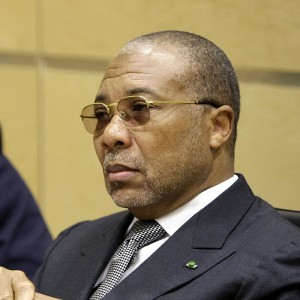
Charles Ghankay Taylor © Michael Kooren / AFP / Getty Images
Name: Charles Ghankay Taylor
Nationality: Liberian
Arrested: March 29, 2006; Taylor was arrested in Nigeria and transferred into custody of the Special Court for Sierra Leone.
Charges: 11 counts of war crimes, crimes against humanity, and other serious violations of international humanitarian law.
Trial start date: January 6, 2008
Trial end date: March 9, 2011
Judgment: April 26, 2012; convicted of all charges.
Sentencing: May 30, 2012; sentenced to 50 years in prison.
How was Taylor brought to trial in The Hague?
Charles Taylor was in Accra, Ghana, attending peace talks, when the news came through that he had been indicted by the Special Court for Sierra Leone on June 4, 2003. He fled back to Liberia, fearing arrest. Two months later, a deal between the United Nations, the United States, the African Union, and ECOWAS (the Economic Community of West African States) was struck to get Taylor out of Liberia. Taylor then went into exile in Nigeria.
Almost three years passed before Taylor was arrested and transferred to the Special Court for Sierra Leone. His time in Nigeria did not go unchallenged, however. Civil society and others were still pushing for him to answer the charges against him in the indictment. In Abuja, Nigeria, two Nigerian businessmen, David Anyaele and Emmanuel Egbuna—whose limbs were allegedly amputated by Taylor’s forces in Liberia—challenged Taylor’s asylum and sought to have him extradited to the Special Court for Sierra Leone to face justice. But the case wound its way through the courts slowly.
Eventually, the new Liberian president, former World Bank official Ellen Johnson-Sirleaf, asked for Taylor to be returned to Liberia. Twenty days later, on March 25, 2006, Nigerian president, Olusdegun Obasanjo informed Johnson-Sirleaf that Liberia was “free to take former President Charles Taylor into its custody.” Within 48 hours, Taylor went missing from his seaside villa in Nigeria. Nigerian officials raised the alarm and ordered his arrest. Taylor was caught by Nigerian authorities on March 29, 2006, as he tried to cross the Cameroon border in a Range Rover. Taylor was placed in a Nigerian Government jet with military guard and flown to Monrovia. Peacekeepers arrested him on the tarmac and put aboard a UN helicopter headed for Freetown, where he was handed over to the Special Court for Sierra Leone.
Citing fears over instability in Liberia if Taylor were tried in neighboring Sierra Leone, Sirleaf-Johnson backed a bid to have Taylor’s trial moved to The Hague. The Dutch Government asked for a Security Council resolution to authorize the transfer, and said it would host Taylor’s trial on the condition that another country agreed in advance to take Taylor after his trial finished (the United Kingdom agreed). Security Council Resolution 1688 was passed unanimously on June 16, 2006, paving the way for Taylor to be tried by the Special Court on the premises of the International Criminal Court in The Hague. Resolution 1688 also requested “all States to cooperate to this end, in particular to ensure the appearance of former President Taylor in the Netherlands for purposes of his trial by the Special Court, and encourages all States as well to ensure that any evidence or witnesses are, upon the request of the Special Court, promptly made available to the Special Court for this purpose.” After some delays, Taylor’s trial began in earnest on January 7, 2008, in The Hague.
Who else was brought to trial at the Special Court for Sierra Leone?
AFRC trial
Alex Tamba Brima (a.k.a. Tamba Alex Brima, Gullit), senior member of the Armed Forces Revolutionary Council (AFRC), Junta, and AFRC/RUF forces, member of the Junta Governing Body, the Supreme Council. Trial Judgment July 19, 2007: guilty, 50 years single term of imprisonment. Appeal Judgment February 22, 2008: guilty, 50 years single term of imprisonment.
Brima Bazzy Kamara (a.k.a. Ibrahim Bazzy Kamara, Alhaji Ibrahim Kamara), senior member of the AFRC, Junta and AFRC/RUF forces, member of the Junta Governing Body, the Supreme Council. Trial Judgment July 19, 2007: guilty, 45 years single term of imprisonment. Appeal Judgment February 22, 2008: guilty, 45 years single term of imprisonment.
Santigie Borbor Kanu (a.k.a. 55, five-five, Santigie Khanu, Santigie Kanu, S.B. Khanu, S.B. Kanu, Santigie Bobson Kanu, Borbor Santigie Kanu), senior member of the AFRC, Junta and AFRC/RUF forces, member of the Junta Governing Body, the Supreme Council. Trial Judgment July 19, 2007: guilty, 50 years single term of imprisonment. Appeal Judgment February 22, 2008: guilty, 50 years single term of imprisonment.
CDF trial
Samuel Hinga Norman, National Coordinator of the Civil Defense Forces (CDF) and Commander of the Kamajors, first in command. Died February 22, 2007.
Moinina Fofana, National Director of War of the CDF, second in command. Trial Judgment October 9, 2007: guilty on several counts, 6 years total term of imprisonment. Appeal Judgment May 28, 2008, guilty on several counts, 15 years total term of imprisonment.
Allieu Kondewa (a.k.a. Allieu Musa) High Priest of the CDF, directly answerable to Samuel Hinga Norman. Trial Judgment October 9, 2007: guilty on several counts, 8 years total term of imprisonment. Appeal Judgment May 28, 2008, guilty on several counts, 20 years total term of imprisonment.
RUF trial
Issa Hassan Sesay (a.k.a. Issa Sesay), senior officer and commander in the Revolutionary United Front (RUF), Junta, and AFRC/RUF forces. From 1993-1997 RUF Area Commander. From 1997-1999 RUF Battle Group Commander, subordinate only to Sam Bockarie (RUF Battle Field Commander), Foday Sankoh (Leader RUF) and Johnny Paul Koroma (Leader AFRC). During the AFRC regime, member of the Junta Governing Body. In 2000, RUF Battle Field Commander, subordinate only to Foday Sankoh and Johnny Paul Koroma. Trial Judgment February 25, 2009: guilty on 16 counts, sentenced to 52 years of imprisonment. The Appeals Chamber upheld the sentence on October 26, 2009.
Morris Kallon (a.k.a. Bilai Karim), senior officer and commander in the RUF, Junta, and AFRC/RUF forces. From 1996-1998 RUF Deputy Area Commander. From 1998-1999 RUF Battle Field Inspector, subordinate only to Issa Sesay (RUF Battle Group Commander), Sam Bockarie (RUF Battle Field Commander), Foday Sankoh (Leader RUF) and Johnny Paul Koroma (Leader AFRC). During the Junta regime member of the Junta Governing Body. In 2000, RUF Battle Group Commander. From June 2001 Battle Field Commander, subordinate only to Foday Sankoh and Johnny Paul Koroma. Trial judgment February 25, 2009: guilty on 16 counts, sentenced to 40 years imprisonment. The Appeals Chamber upheld the sentence on October 26, 2009.
Augustine Gbao (a.k.a. Augustine Bao), senior officer and commander in the RUF, Junta, and AFRC/RUF forces. From 1996-1998 senior RUF Commander in Kailahun District, subordinate only to the RUF Battle Group Commander, the RUF Battle Field Commander, Foday Sankoh (Leader RUF) and Johnny Paul Koroma (Leader AFRC). From 1998-2002 Overall Security Commander in the AFRC/RUF forces, subordinate only to Foday Sankoh and Johnny Paul Koroma. From 1999-2002 also Joint Commander of AFRC/RUF forces in the Makeni area, Bombali District, subordinate only to the RUF Battlefield Commander, Foday Sankoh (Leader RUF) and Johnny Paul Koroma (Leader AFRC). Trial judgment February 25, 2009: guilty on 14 counts, sentenced to 25 years imprisonment. The Appeals Chamber upheld the sentence on October 26, 2009.
Did the Special Court for Sierra Leone indict others?
The Special Court issued indictments against three other individuals. On December 8, 2003, indictments were withdrawn against Foday Saybana Sankoh, Leader and founder of the RUF, and Samuel Bockarie, Commander in Chief of the RUF, due to the deaths of the two accused.
The whereabouts and fate of Johnny Paul Koroma (a.k.a. JPK), leader of the AFRC, are unknown. The indictment against him remains in force.
More about the Special Court for Sierra Leone
Legitimacy/legal competence of the Special Court for Sierra Leone
- The Special Court has universal jurisdiction to try crimes against humanity and war crimes.
- The Special Court tries only those accused who allegedly bear most responsibility for crimes in Sierra Leone from November 30, 1996. (Article 1(1) of the Statute of the Special Court for Sierra Leone.
- Accused person’s position (Head of State) does not bar jurisdiction for crimes against humanity or war crimes. (Article 6(2) of the Statute of the Special Court for Sierra Leone).
Personal jurisdiction of the Special Court
The personal jurisdiction of the Special Court refers to its power to prosecute only “those who bear the greatest responsibility” for the grave crimes committed in Sierra Leone from November 30, 1996. The prosecutor of the Special Court has defined the phrase “bearing the greatest responsibility” to mean those individuals who served as major commanders in the various fighting factions. While many individuals might have been involved in the conflict in Sierra Leone, it is left with the prosecutor to determine who falls in the category of “those who bear the greatest responsibility.” The statute of the court provides that the official position of an individual, whether as head of state, will not stop the prosecutor from bringing charges against him. While many heads of states have been linked with the conflict in Sierra Leone, such as Presidents Ahmed Tejan Kabbah of Sierra Leone, Blaise Campore of Burkina Faso, Muamarr Ghadafi of Libya, or Lansana Conteh of Guinea, it is the prosecutor’s duty to determine where the evidence leads him. In this case, the prosecutor determined that the evidence led him to Mr. Taylor.
Temporal jurisdiction of the Special Court
The temporal jurisdiction of the Special Court refers to its power to prosecute only those crimes committed from November 30, 1996. While the court can hear evidence of crimes committed prior to November 30, 1996, it cannot find an accused guilty of any such crimes committed prior to that cut-off date. During Mr. Taylor’s trial, many witnesses have testified about events which took place prior to November 30, 1996, in which they alleged that Mr. Taylor was involved. While the prosecution can argue that these issues will build the foundation for the main charges against Mr. Taylor, the judges will not find him guilty based on any activities that occurred prior to November 30, 1996.
Territorial jurisdiction of the Special Court
The territorial jurisdiction of the Special Court refers to its powers to prosecute individuals only for crimes committed in the “territory of Sierra Leone.” While the Special Court can indict and prosecute persons other than Sierra Leoneans, such prosecutions would only be for crimes committed in the territory of Sierra Leone. During the trial of Mr. Taylor, many witnesses have spoken about events which took place in Liberia. The court, however, will only consider those events that took place in Sierra Leone or those events that took place in Liberia but were directly a part of the events taking place in Sierra Leone. For example, if a witness testifies about a meeting in Liberia relating to RUF activities, where Mr. Taylor was present, then such issues will be considered as part of events in Sierra Leone. Or if a witness testifies about arms or diamond trade in Liberia, but which were meant to impact the war in Sierra Leone, those issues will be considered as part of the evidence relating to the war in Sierra Leone. Other than that, if a witness testifies about how the NPFL fought in Liberia or how NPFL commanders were killed in Liberia, they will not form the basis of conviction for the conflict in Sierra Leone
The Accused
- Charles Ghankay Taylor: Leader or Head of the National Patriotic Front of Liberia (NPFL) from the late 1980s onward; President of the Republic of Liberia from August 2, 1997, until August 11, 2003.
The Judges
- Justice Teresa Doherty
- Justice Julia Sebutinde
- Justice Richard Lussick
- Justice El Hadji Malick Sow, Alternate
The Prosecution
- Brenda J. Hollis, Chief Prosecutor
- Mohamed Bangura, Prosecutor
- Nicholas Koumjian, Prosecutor
- Kathryn Howarth, Prosecutor
- Leigh Lawrie, Prosecutor
- Christopher Santora, Prosecutor
- Ruth Mary Hackler, Prosecutor
- Ula Nathai-Lutchman, Prosecutor
- Nathan Quick, Prosecutor
- Maja Dimitrova, Case Manager
The Defense
- Courtenay Griffiths, Lead Defense Counsel
- Terry Munyard, Defense Counsel
- Morris Anyah, Defense Counsel
- Silas Chikera, Defense Counsel
- James Supuwood, Defense Counsel
Key Organizations Referred to during Taylor’s Trial
- AFL: Armed Forces of Liberia
- AFRC: Armed Forces Revolutionary Council. Founded by members of the Armed Forces of Sierra Leone who seized power from the elected government of Sierra Leone via a coup d’état on May 25, 1997. Soldiers of the Sierra Leone Army comprised the majority of the AFRC membership. Shortly after the AFRC seized power, the RUF joined with the AFRC.
- APC: All People’s Congress, political party in Sierra Leone
- ATU: Anti-Terrorist Unit. President Taylor’s personal security force, headed by Taylor’s son Chuckie Taylor.
- Black Gadaffa: A renegade group within the NPFL with as leader General Gbong.
- Black Guards: Foday Sankoh’s private security force.
- CDF: Civil Defense Forces. An organised armed force comprising various tribally-based traditional hunters. The Kamajors were comprised mainly of persons from the Mende tribe resident in the south and east of Sierra Leone, and were the predominant group within the CDF. Other groups playing a less dominant role were the Gbentis and the Kapras, both comprising mainly of Temnes from the north; the Tamaboros comprising mainly of Korankos also from the north; and the Donsos, comprising mainly of Konos from the east. The CDF fought against the RUF and AFRC.
- CPS: Close Protective Service. CPS was directly responsible for the safety and welfare of the presidential family of Charles Taylor.
- DDRR: Disarmament, Demobilization, Reintegration and Rehabilitation Program
- ECOMOG: Economic Community of West African States Monitoring Group. A West African multilateral armed force established by the Economic Community of West African States (ECOWAS). ECOMOG is not a standing army, but a formal arrangement for separate armies to work together, along similar lines to NATO. It is composed mainly of Nigerian armed forces and financial resources, with assistance from other ECOWAS members—Ghana, Guinea, Sierra Leone, Gambia, Liberia, Mali, Burkina Faso, and Niger.
- ECOWAS: Economic Community of West-African States
- ELBC: Liberia Broadcasting System, formerly known by the name Eternal Love Broadcasting Corporation.
- EMG: Executive Mansion Ground. A presidential residency of Charles Taylor in Gbarnga, Central Liberia.
- ENG: Executive National Guard, a military branch on its own, directly reporting to Taylor, consisting of Liberian instructors; Chief of Staff: Cassius Jacob.
- Executive Outcomes: An organization of South African mercenaries.
- ICC: International Criminal Court. Based in The Hague, The Netherlands.
- ICTR: International Criminal Tribunal for Rwanda
- ICTY : International Criminal Tribunal for the former Yugoslavia
- IDU: Internal Defense Unit in the RUF
- IGNU: Interim Government of National Unity, led by Amos Sawyer in Liberia, ceased to exist in 1994
- INPFL: Independent National Patriotic Front of Liberia, founded by Prince Johnson in 1990 following an internal struggle within the NPFL.
- JSBIP: Joint Security Board Investigation Panel, a semi-court for the RUF.
- Junta: Another names for the AFRC/RUF regime that ceased power in Sierra Leone in 1997.
- Kamajors: Predominant group within the CDF, mainly from the Mende tribe.
- LBC: Liberian Peace Council
- LDF: Lofa Defense Force, consisting of RUF and NPFL soldiers under Gambian Commander Jallow (Jalloh).
- LISCR: Liberian International Ship and Corporate Registry
- LNTG: Liberian National Transitional Government, a unity government of warlords, including Charles Taylor.
- LUDF: Liberia United Defense Force founded by Albert Karpeh, later becoming ULIMO.
- LURD: Liberians United for Reconciliation and Democracy. A Liberian rebel group active from around 1999-2003. Its main purpose was to remove Taylor from power.
- MMC: Makpele Mining Company, at one time Foday Sankoh’s Headquarters.
- MODEL: Movement for Democracy in Liberia
- NPDC: National Provisional Defense Council, the ruling authority in Sierra Leone from April 30, 1992, until July 1992.
- NPFL: National Patriotic Front of Liberia, a Liberian rebel group loyal to Taylor
- NPRAG: National Patriotic Reconstruction Assembly Government, a self-declared, alternative administration established in early 1991 in areas held by the NPFL during the civil war. It was formed in opposition to the internationally recognized IGNU (Interim Government of National Unity) led by Amos Sawyer. The NPRAG was based in Gbarnga, Bong County. Charles Taylor declared himself head of the NPRAG, but this led to a dispute that eventually split the rebel group. Both the NPRAG and IGNU ceased to exist in 1994.
- NPRC: National Provisional Ruling Council, same as NPDC.
- NSA: National Security Agency, in Liberia
- OTC: Oriental Timber Corporation. Once Liberia’s largest logging company. President was Gus Kouwenhoven.
- OTP: Office of The Prosecutor
- RUF: Revolutionary United Front. Founded in Libya in 1988/1989, led by Foday Sankoh (co-founders Abu Kanu and Rashid Mansaray) and began organised armed operations in Sierra Leone in or about March 1991. It later developed into a political party, the Revolutionary United Front Party.
- SBUs: Small Boy Units, boys kidnapped from their homes, forced to become camp followers, used as slaves for work, later forced to become child soldiers in the RUF.
- Scorpion Unit: A unit within the RUF, with Keita as Commander, granted by Bockarie.
- SCS: Supreme Council of State, the ruling authority in Sierra Leone from July 1992 until March 29, 1996.
- SCSL: Special Court for Sierra Leone
- SFM: Strike Force Marine
- SGUs: Small Girl Units, see SBU’s
- SLA: Sierra Leone Army
- SLPP: Sierra Leone People’s Party, one of the major political parties in Sierra Leone.
- SOD: Special Operations Division of the Liberian National Police
- SOFA: Special Operational Force for Africa
- SSS: Special Security Service in Liberia under Taylor. Director was Benjamin Yeaten.
- SSU: Special Security Unit in Liberia under Taylor
- STF: Special Task Force. A group of Liberian fighters with roots in the SLA and in ULIMO.
- TDY: Temporary Duties in the Year. A temporary assignment outside one’s base camp.
- TRC: Truth and Reconciliation Commission
- ULIMO: United Liberation Movement for Democracy. A rebel group, which fought Taylor during Liberia’s civil war in the early 1990s, led by Alhaji Kromah. Later split into ULIMO-J and ULIMO-K.
- ULIMO-J: United Liberation Movement for Democracy-Johnson. Founded in 1994/1995 following internal power disputes in ULIMO. Led by Roosevelt Johnson.
- ULIMO-K: United Liberation Movement for Democracy-Kromah. Founded in 1994/1995 following internal power disputes in ULIMO. Led by Alhaji Kromah.
- Vanguards: RUF members trained in late 1980s to early 1990s in NPFL territory in Liberia. These formed part of the first group of RUF fighters who invaded Sierra Leone in March 1991.
- WACS: Women Army Commando Soldiers in the RUF
- West Side Boys: An armed group, splinter faction of the AFRC, headed by Bazzy Kamara and with Hassan Bangura as second-in-command. It captured and held members of a mostly West African peacekeeping force in 2000.
- White Flower: Taylor’s residence in Monrovia, Liberia.
- WVS: Witness and Victims Section of the SCSL
Key Individuals referred to during Taylor’s Trial
- Sani Abacha: Military ruler of Nigeria 1993-1998.
- Ibrahim Babangida: Military ruler of Nigeria 1985-1993.
- Abdulai Bah: Gambian Chief of Staff.
- Ibrahim Bah: General in the RUF, former fighter with NPFL.
- Patrick Bangura: RUF Commander in charge of diamond mining in Yandohun and in Giema.
- Hassan Papa Bangura (a.k.a. Bomb Blast): Member of the Junta AFRC Supreme Council.
- K.S. Banya: AFRC captain.
- Augustine Bao (a.k.a. Augustine Gbao): Senior officer and commander in the RUF, Junta and AFRC/RUF forces. Convicted and sentenced to 25 years of imprisonment in the RUF trial of the Special Court for Sierra Leone.
- Matthew Barbue: Liberian front-line Commander in the RUF.
- Julius Maada Bio: Chairman of the Supreme Council of State in Sierra Leone from January 17, 1996, to March 29, 1996.
- Steve Bio: Businessman and friend of the RUF.
- Moses Zeh Blah: Vice-president of Liberia during Taylor’s Presidency, President of Liberia from August 11, 2003, until October 14, 2003, 28th Prosecution witness.
- Samuel Bockarie (a.k.a. Mosquito, Borbor Samai): Senior commander of RUF; later Commander in Chief of the RUF in 1998 and most of 1999; indictment by the Special Court for Sierra Leone withdrawn on December 8, 2003; died May 6, 2003, allegedly killed by Benjamin Yeaten on instructions of Charles Taylor.
- Alex Tamba Brima (a.k.a. Gullit): Senior member of the AFRC, Junta and AFRC/RUF forces, member of the Junta Governing Body, the Supreme Council. Convicted and sentenced to 50 years imprisonment in the RUF trial of the Special Court for Sierra Leone.
- Alfred Brown: Senior radio operator in the RUF.
- Gyude Bryant: Chairman of the National Transitional Government of Liberia from October 14, 2003, to January 16, 2006.
- José Maria Caballero, (a.k.a. Father Cheema): Spanish Catholic Priest working in Sierra Leone. 6th Prosecution witness.
- Suwandi Camara: Gambian member of the SSS; 11th Prosecution witness.
- Monie Captan: Minister of Foreign Affairs under Charles Taylor.
- Musa Cissé (a.k.a. Mamadee Kamara)P: Chief of Presidential Protocol of Liberia, allegedly handled funds from diamond and timber sales on Taylor’s behalf.
- Eldred Collins: RUF Commander and spokesman.
- Blaise Compaoré: President of Burkina Faso since 1987.
- Lansana Conteh: Former President of Guinea.
- Divun – General in the NPFL.
- Samual K. Doe: Head of the People’s Redemption Council from April 12, 1980, to January 6, 1986; President of the Republic of Liberia from January 6, 1986, to September 9, 1990; assassinated in a coup d’état.
- Sam Dokie: Close associate of Charles Taylor, murdered in December 1997, allegedly by Benjamin Yeaten on orders of Charles Taylor.
- Varfley A. Dolleh: Member of the National Transitional Government of Liberia of Gyude Bryant
- Adolphus Dolo (a.k.a. General Peanut Butter): Security Director for OTC, Security Director of Hotel Africa (a government owned hotel during Taylor’s administration), leader of the SFM, and today a junior senator for Nimba County in the Liberian House of Representatives.
- Domingo: RUF General.
- Dry Pepper (a.k.a. Menquenagbeh): RUF Commander.
- George Duana (a.k.a. Jack the Rebel): One of the junior forces for the NPFL.
- Corinne Dufka: Senior Researcher for the Africa Division of Human Rights Watch, 7th Prosecution witness.
- Eagle (a.k.a. Karmoh Kanneh): RUF Commander, 27th Prosecution witness.
- Elephant (a.k.a. Rashid): RUF Commander.
- Stephen Ellis: Senior Researcher at the African Studies Centre, University of Leiden in The Netherlands, 5th Prosecution witness.
- Gnassingbé Eyadema: President of Togo from 1967 until his death on February 5, 2005.
- Moinina Fofana: National Director of War of the CDF and second in command. Tried before the Special Court for Sierra Leone. Convicted and sentenced to 15 years imprisonment.
- Alison des Forge: Consultant of Human Rights Watch.
- G5: a soldier/commander in charge of civilians in the RUF.
- Muammar al Gaddafi: Head of State of Libya. Had a revolutionary vision that led him to support a number of anti-American, anti-Western movements. Instituted military training camps in Libya where NPFL and RUF rebels received their original trainings before attacking Liberia and Sierra Leone respectively.
- Nixon Gaye: First Chief of Staff SFM.
- Augustine Gbao (a.k.a. Augustine Bao): Senior officer and commander in the RUF, Junta and AFRC/RUF forces. Tried before the Special Court for Sierra Leone. Convicted and sentenced to 25 years of imprisonment.
- Gbong: General of the Black Gadaffa, a renegade group within the NPFL.
- General 245: Female General in NPFL.
- Momoh Gibba: Senior aide-de-camp to Taylor, Liberian General.
- Junior Goe: Delta Force Commander, died in December 1994, allegedly by the order of Charles Taylor.
- Reginald Goodridge: Minister of Information under Taylor.
- Ice T (a.k.a. Alimamy Bobson Sesay): Former member SLA and former combat commander in the AFRC, now an evangelical pastor, 23rd Prosecution witness.
- Jack the Rebel (a.k.a. George Duana): One of the junior commanders in the NPFL.
- Jackson: Gambian aide-de-camp.
- Cassius Jacob: Liberian General, Chief of Staff EMG, died in December 1994, allegedly by the order of Charles Taylor.
- Alhaji Saikou Jaiteh: Gambian who was in Libya with Taylor and Foday Sankoh.
- Jumu Jalloh: RUF Commander.
- Mustapha Jallow (Jalloh): Gambian Commander in RUF, LDF Commander, EMG Security Commander.
- Sahr James (a.k.a. Zedman): A chief radio operator and station sergeant.
- Jabati Jaward: Member of RUF SBU and later recruited into Taylor’s ATU, 35th Prosecution witness.
- Pa Jean: RUF Commander, died in 1993, Morris Kallon took over his command.
- Johnny Paul Koroma (a.k.a. JPK): Leader of the AFRC from May 26, 1997, to February 12, 1998. At present his whereabouts and fate are unknown. The indictment against him by the Special Court for Sierra Leone remains in force.
- Prince Johnson: Founder of the INPFL in 1990, in charge of the murder of Samuel Doe; since 2005 a senior senator in the Liberian Congress representing Nimba County.
- Roosevelt Johnson: ULIMO member; Head of ULIMO-J following the split of ULIMO into ULIMO-J and ULIMO-K in 1994/1995.
- Ellen Johnson-Sirleaf: President of Liberia from January 16, 2006, until present; first female President in Africa.
- S.B. Jumu: Adviser to Head of State Strasser and member of the Supreme Council of State in Sierra Leone.
- Jungle: Member of the SSS and bodyguard to Benjamin Yeaten.
- Jungle (a.k.a. Daniel Tamba): Junior RUF Commander.
- Stanley Jusu: RUF Commander.
- Ahmad Tejan Kabbah: President of Sierra Leone from March 29, 1996, to May 25, 1997, and from March 10, 1998 to September 17, 2007.
- Ali Kabbeh: Allegedly originally set up the RUF in Libya.
- Kaisoko: Military Commander in the RUF.
- Morris Kallon (a.k.a. Bilai Karim): Senior officer and commander in the RUF and AFRC/RUF forces. Tried in the RUF trial of the Special Court for Sierra Leone. Convicted and sentenced to 40 years of imprisonment.
- Brima Bazzy Kamara (a.k.a. Ibrahim Bazzy Kamara, Alhaji Ibrahim Kamara): Senior member of the AFRC and AFRC/RUF forces, member of the AFRC Governing Body, the Supreme Council. Tried in the AFRC trial of the Special Court for Sierra Leone. Convicted and sentenced to 45 years imprisonment.
- Idrissa Kamara (a.k.a. Leather Boot): Military supervisor in the AFRC/RUF in 1998, now a protection officer for the President of Sierra Leone, Ernest Bai Koroma.
- Mamadee Kamara (a.k.a. Cissé, Musa): Chief of Presidential Protocol of Liberia, allegedly handled funds from diamond and timber sales on Taylor’s behalf.
- Perry Mohamed Kamara: Former RUF Radio Communications Officer, 10th Prosecution witness.
- Eddie Kanneh: Ex-field Commander; Diamond Manager for the RUF.
- Karmoh Kanneh (a.k.a. Eagle): RUF Commander, 27th Prosecution witness.
- Abu Kanu: Co-founder of the RUF, later executed at the demand of Foday Sankoh.
- Santigie Kanu Kanu (a.k.a. 55): Senior member of the AFRC, Junta and AFRC/RUF forces, member of the Junta Governing Body, the Supreme Council. Tried in the AFRC trial of the Special Court for Sierra Leone. Convicted and sentenced to 50 years imprisonment.
- Samuel Kargbo: SLA soldier, 29th Prosecution witness.
- Bilai Karim (a.k.a. Morris Kallon): Senior officer and commander in the RUF, Junta and AFRC/RUF forces. Tried in the RUF trial of the Special Court for Sierra Leone. Convicted and sentenced to 40 years imprisonment.
- Albert Karpeh: Founder of the LUDF.
- Abu Keita: Deputy Chief of Staff in ULIMO-K and ranked General until disarmed in 1996. Was also in the AFL, the LUDF, and ULIMO.
- David D. Kmormakpor: Chairman of the Council of State in Liberia from March 7, 1994, to September 1, 1995.
- Dennis Koker: Former soldier for the NPRC in Sierra Leone, provided security for E.B. Jumu, 4th Prosecution witness.
- Allieu Kondewa (a.k.a. Allieu Musa): High Priest of the CDF. Tried before the CDF Trial of the Special Court for Sierra Leone. Convicted and sentenced to 20 years imprisonment.
- Sekou Konneh: Leader of LURD.
- Ernest Bai Koroma: President of Sierra Leone from September 17, 2007, until present.
- Musa Koroma: Fourteenth Prosecution witness.
- Pa Kosia: General Security Officer in the RUF.
- Gus Kouwenhoven: Owner of Hotel Africa; President of the Oriental Timber Company. Has been accused by the Dutch public prosecution service of: a) illegal arms trade to the regime of Charles Taylor in Liberia from 2001-2003, and b) participation in war crimes committed by Liberian troops and/or militias from 2000-2002 during armed conflicts in Guinea and Liberia. The District Court of The Hague had sentenced Kouwenhoven on June 7, 2006, to a term of imprisonment of 8 years for illegal arms trade, but acquitted him of involvement in war crimes. Subsequently both Kouwenhoven and the Prosecution appealed. On March 10, 2008, the Court of Appeal of The Hague acquitted Kouwenhoven of all charges.
- Krio Mammy: Female RUF member.
- Alhaji Kromah: Head of ULIMO-K following the split of ULIMO into ULIMO-J and ULIMO-K in 1994/1995.
- Monia Lahai: RUF Commander in charge of diamond mining in Monfidor/Sahbahun.
- Mike Lamin: Commander in the RUF, member of the Junta AFRC Supreme Council.
- Foday Lansana: Liberian former NPFL/RUF radio operator, 17th Prosecution witness.
- Leather Boot (a.k.a. Idrissa Kamara): Military supervisor in the AFRC-RUF in 1998, now a protection officer for the President of Sierra Leone, Ernest Bai Koroma.
- Liberian Mosquito (a.k.a. Christopher Varmoh): In charge of Lofa County in 1998.
- Dr. Manneh (aka Kukoi Samba Sanyang): a Gambian who tried but failed a coup d’etat in The Gambia, trained in Libya, head of SOFA.
- Mustapha MarvinMansaray: Former RUF Commander, 19th Prosecution witness.
- Rashid Mansaray: Co-founder of the RUF, later executed at the demand of Foday Sankoh.
- Joseph Marzah (a.k.a. Zigzag): Chief of Operations in the NPFL, 21st Prosecution witness,
- Massaka: Senior RUF Commander.
- Gibril Mussaquoi: RUF Commander.
- Menquenagbeh (a.k.a. Dry Pepper): RUF Commander.
- Dennis Mingo (a.k.a. Superman): Senior Commander in the RUF, allegedly killed by Benjamin Yeaten on the orders of Charles Taylor.
- Leonid Minin: Notorious Ukrainian arms dealer.
- Isaac Tamba Mongor: RUF Commander, member of the Junta AFRC Supreme Council, 20th Prosecution witness.
- Joseph Montgomery: Deputy Director of Operations SSS.
- Amos Morris: Driver of 3rd Prosecution witness Varmuyan Sherif.
- Mosquito (a.k.a. Sam Bockarie, Borbor Samai): Senior commander of RUF; later Commander in Chief of the RUF in 1998 and most of 1999; indictment by the Special Court for Sierra Leone withdrawn on December 8, 2003; died May 6, 2003.
- Mosquito Spray: A LURD Commander who allegedly said he was in Liberia to spray the AFL and national police and remove Charles Taylor from power.
- Allieu Musa (a.k.a. Allieu Kondewa): High Priest of the CDF. Tried before the CDF Trial of the Special Court for Sierra Leone. Convicted and sentenced to 20 years imprisonment.
- Isaac Musa: NPFL General, military adviser to Taylor.
- SAJ Musa (a.k.a. Solomon Anthony James): Former Vice Chairman of the NPRC and later AFRC Commander, died during the rebel advance to Freetown in 1998.
- Kwame Nkruma: First President of Ghana, from March 6, 1957-July 1, 1960. Advanced the concept of Pan-Africanism, the notion that Africa should be unified, as a political program.
- Samuel Hinga Norman: National Coordinator of the CDF and Commander of the Kamajors, first in command. Tried before the CDF Trial of the Special Court for Sierra Leone. Died February 22, 2007.
- Binaifer Nowrojee: Counsel to the Africa Division of Human Rights Watch.
- Nya (a.k.a. Foday Lansana): Liberian radio operations instructor in the RUF.
- Jackson Johnday Nyassi: A Gambian rebel commander in the NPFL.
- One Man One: Chief of Staff for the NPFL.
- Peanut Butter (a.k.a. Adolphus Dolo): Security Director for OTC, Security Director of Hotel Africa (a government owned hotel during Taylor’s administration), leader of the SFM, and today a junior senator for Nimba County in the House of Representatives.
- Monica Pearson: Liberian Training Commander in the RUF.
- Peleto (a.k.a. Amara Salia Peleto): Member of RUF, allegedly issued orders during operations in attacks on Guinea from 2000-2001.
- Peper: General in the NPFL.
- Ruth Perry: Chairwoman of the Council of State in Liberia from September 3, 1996-August 27, 1997.
- Alice Pyne: Radio operator, former girlfriend of 17th Prosecution witness Foday Lansana; 32nd Prosecution witness.
- Thomas Quiwonkpa: Cousin of Moses Blah, was in the army with Samuel Doe. Fled from Liberia in 1983 with several others, including Charles Taylor and Ellen Johnson-Sirleaf. Planned a coup against Doe in November 1985, which failed and he was killed.
- Rambo: Liberian front-line Commander in the RUF, allegedly killed by “Zigzag” (Joseph Marzah), allegedly instructed by Benjamin Yeaten.
- Rashid (a.k.a. Elephant): RUF Commander.
- Rashim: One of Foday Sankoh’s bodyguards; Commander at the RUF ‘guesthouse.’
- Rocky (a.k.a. Emmanuel Williams): RUF Commander.
- S.B. Rogers: War Council Chairman of the RUF.
- Albert Hindowa Saidu (a.k.a. Arbor): From the Mende tribe, before the war a college student to become a teacher. Captured by rebels and forced to become a junior commando, 29th Prosecution witness.
- Mohamed Ahmad Salame: Owner of the Mohamed Group of Companies; Taylor’s informal diplomatic representative.
- Salami: Senior bodyguard commander to Benjamin Yeaten, RUF member.
- Samuel Bockarie (a.k.a. Sam Bockarie, Mosquito): Senior commander of RUF; later Commander in Chief of the RUF in 1998 and most of 1999; indictment by the Special Court for Sierra Leone withdrawn on 8 December 2003; died 6 May 2003.
- Kukoi Samboyan: A Gambian, vice-president to Taylor during the NPRAG regime.
- Wilton G.S. Sankawulo: Chairman of the Council of State in Liberia from September 1, 1995-September 3, 1996.
- Foday Saybana Sankoh: Leader and founder of the RUF. Indictment by the Special Court for Sierra Leone withdrawn on December 8, 2003. Died July 29, 2003, from complications of a stroke.
- Kukoi Samba Sanyang (a.k.a. Dr. Manneh): A Gambian who tried but failed a coup d’etat in Gambia, trained in Libya, head of SOFA.
- Amos Sawyer: President of the Interim Government of National Unity in Liberia from November 22, 1990-March 7, 1994.
- Michael Seboe: Task Force Commander, died in December 1994, allegedly by the order of Charles Taylor.
- Alimamy Bobson Sesay (a.k.a Ice T): Former member SLA and former combat commander in the AFRC, now an evangelist pastor, 23rd Prosecution witness.
- Mohamed Sesay: Thirteenth Prosecution witness.
- Varmuyan Sherif: Battalion Commander and later General Supervisor in ULIMO in the early 1990’s. Assistant Director for Operations for the SSS from 1995-1999/2000. Various posts in the Immigration Department (Deputy Chief of Security, Chief of Security, Assistant Commissioner of Operations, Deputy Commissioner of Operations) in the Liberian government from 2000-2003. Deputy Chief of Staff for the Army Division from 2001-2002. 3rd Prosecution witness.
- Yanks Smart: A Gambian, ambassador to Libya under Taylor during the NPRAG regime.
- Ian Smillie: Research Coordinator with Partnership Africa Canada’s “Diamonds and Human Security Project” and a diamond expert, 1st Prosecution witness.
- Valentine Strasser: Chairman of the National Provisional Defense Council in Sierra Leone from May-July 1992; Chairman of the Supreme Council of State in Sierra Leone from July 1992-January 1996
- Superman (a.k.a. Dennis Mingo): Senior Commander in the RUF, allegedly killed by Benjamin Yeaten.
- Supoon: SBU Commander, nephew of Charles Taylor.
- Sylvester: Liberian Captain in the RUF.
- Daniel Tamba (a.k.a. Jungle): Junior RUF Commander.
- Mohamed Tarawalli (a.k.a. Zino): RUF Commander.
- Chuckie Taylor (a.k.a. Charles McArthur Emmanuel Taylor, Roy Belfast): Charles Taylor’s son and head of the ATU; mother is the American Bernice Yolanda Emmanuel; convicted in the United States for torture.
- Prince Taylor: Commander of all the junior and senior G5’s in the RUF.
- William R. Tolbert, Jr.: President of the Republic of Liberia from July 23, 1971-April 12, 1980; assassinated in a coup d’état.
- Joe Tuah: Artillery Commander in the NPFL, deputy of Benjamin Yeaten in the SSS.
- Peter Borbor Vandi: Built an airfield for the RUF in Buedu.
- Christopher Varmoh (a.k.a. Liberian Mosquito): In charge of Lofa County in 1998.
- Yakba Walo: Political leader and spokesman of the LDF.
- Emmanuel Williams (a.k.a. Rocky): RUF Commander.
- Lawrence Wohmandia: Commander in the RUF.
- Benjamin Yeaten: Head of the Special Security Service in Liberia; Director of SSS until 2003.
- Zedman (a.k.a. Sahr James): A chief radio operator and station sergeant
- Zigzag (a.k.a. Joseph Marzah): Chief of Operations in the NPFL, 21st Prosecution witness.
- Zino (a.k.a. Mohamed Tarawally): RUF Commander.
Prosecution Witnesses
- Ian Smillie: Expert Witness, a Research Coordinator with Partnership Africa Canada’s “Diamonds and Human Security Project” and a diamond expert
- Alex Tamba Teh (TF1-015): Crime base Witness, a Sierra Leonean Pastor, born in Tombodu, in Kono District
- Vamunyan Sherif (TF1-406): Linkage Witness, a former member of Taylor’s personal security force (Special Security Service or SSS), born in Voinjama in Liberia
- Dennis Koker (TF1-114): Crime base Witness, a former soldier for the NPRC in Sierra Leone, he provided security for the advisor to the President, E.B. Jumu, who was a member of the Supreme Council of State; from the Mende tribe
- Dr. Stephen Ellis: Expert Witness, a Senior Researcher at the African Studies Centre, University of Leiden in The Netherlands
- José Maria Caballero (a.k.a. Father Cheema) (TF1-326): Factual Witness, a Spanish Catholic Priest, working in Sierra Leone, started a program of reintegrating and educating child soldiers
- Corinne Dufka: Expert Witness, a Senior Researcher for the Africa Division of Human Rights Watch
- Abu Keita (TF1-276): Linkage Witness, a Mandingo, born in Zorzor, Lofa County, Liberia; he has been in the Armed Forces of Liberia (AFL), the LUDF, ULIMO and ULIMO-K, was deputy Chief of Staff in ULIMO-K and ranked General until disarmed in 1996
- TF1-371: Linkage Witness, closed session testimony
- Perry Mohamed Kamara (TF1-360): Insider Witness, former RUF radio communications operator
- Suwandi Camara (TF1-548): Insider Witness, a Gambian, trained in Libya, later member of the SSS
- TF1-026: Crime base female Witness, 24-year old woman, member of the Limba tribe, from Freetown, Sierra Leone; testified with protective measures
- Mohamed Sesay (TF1-101): Crime base Witness, Sierra Leonean whose both hands have been amputated
- Musa Koroma (TF1-192): Crime base Witness, Sierra Leonean whose right arm has been badly mutilated
- TF1-150: Factual Witness, Closed Court Session
- Aruna Gbondo (TF1-330): Crime base Witness from Talia, Kailahun District, Sierra Leone, rice farmer forced to work for the rebels
- Foday Lansana (TF1-275): Insider Witness, a Liberian former NPFL/RUF radio communications operator
- TF1-362: Insider Witness, closed session testimony
- Mustapha Marvin Mansaray (TF1-337): Insider Witness from Fonima, Pujehun District, Sierra Leone from the Mende tribe, former RUF Commander
- Isaac Tamba Mongor (TF1-532): Insider Witness (TF1-532), from Kangama, Kailahun District, Sierra Leone, member AFRC and RUF
- Joseph D. Marzah (a.k.a. Zigzag Marzah) (TF1-399): Insider Witness (TF1-399), from Nimba County, Liberia, Chief of Operations in the NPFL
- TF1-516: Insider Witness, former RUF radio communications operator; protective measures: pseudonym, screen, image distortion
- Alimamy Bobson Sesay (a.k.a. Ice T) (TF1-334): Insider Witness, former member SLA and former combat commander in the AFRC, now an evangelicalt pastor
- TF1-143: Child Witness, former child soldier, now 22 years old, testified with protective measures
- witness = TF1-215, did not take the stand, Prosecution wanted protective measures, Defense argued that the witness had appeared in a video released to the public, Court stripped witness of protective measures and Prosecution withdrew the witness
- TF1-028: Crime base female Witness, woman from Sierra Leone, 42 years old of the Madinka tribe, abducted and captivated by the rebels; testified using protective measures
- Karmoh Kanneh (TF1-571): Insider Witness, a.k.a. Eagle, former RUF Commander
- Moses Zeh Blah (TF1- 561): Insider Witness, from the Gio tribe, Vice-President of Liberia during Taylor’s Presidency, President of Liberia from August 11, 2003 untill October 14, 2003
- Samuel Kargbo (TF1-597): Insider Witness, from the Limba tribe, Sierra Leone, former AFRC Council member and Sierra Leone Army soldier
- Albert Hindowa Saidu (TF10577): Insider Witness, from the Mende tribe, before the war a college student to become a teacher; captured by rebels and forced to become a junior commando
- TF1-539: Insider Witness, testified using protective measures
- TF1-590: Insider Witness, testified using protective measures
- Alice Pyne (TF1-584): Insider Witness, former NPFL/RUF radio communications operator, at one time girlfriend of 17th Prosecution Witness Foday Lansana
- TF1-375: Insider Witness, captured as a boy of 11 by the RUF in 1991,testified using protective measures
- TF1-567: Insider Witness, captured as a civilian from his home town, trained by NPFL rebels to fight for the RUF; later became a member of the Black Guards, serving as a bodyguard to RUF leader Foday Sankoh
- Jabati Jaward (TF1-388): Insider Witness, Sierra Leonean, captured by the RUF in 1991 and put in a Small Boys Unit at the age of 18
- TF1-367: Insider Witness, former mining commander in the RUF with close links to those in high command; was co-trained with Sam Bockarie, Mike Lamin and Issa Sesay
- TF1-367: Insider Witness, former mining commander in the RUF with close links to those in high command; was co-trained with Sam Bockarie, Mike Lamin and Issa Sesay
- TF1-338: Insider Witness, former RUF member, testified using protective measures
- TF1-585: Insider Witness, former RUF radio operator, testified using protective measures
- Mohamed Berete Kabbah (TF1-568): Insider Witness, overall signal commander for the RUF
- TF1-189: Crime base witness, testified with protective measures
- Alex Sheku Bao (TF1-122): Sierra Leone Police Officer, testified about complaints of RUF murders during the AFRC reign in 1997
- Stephen Smith (TF1-588): Factual Witness, American Professor who has worked as journalist in West Africa and has written extensively about issues in the sub-region
- Edesanya Sandy Hyde: Sierra Leone police officer, testified about atrocities committed by the RUF and AFRC
- Samuel Bull (TF1-065): Civilian witness, testified about AFRC/RUF activities in Kono District
- TF1-459: Civilian witness, testified AFRC/RUF activities in Kono District
- Tamba Mondeh (TF1-173): Crime Base Witness, testified about AFRC/RUF activities in Kono District
- Abdul Otonjo Conteh (TF1-060): Insider Witness, testified about RUF attacks and mining activities in Kenema District and thehandling of diamonds by Sam Bockarie
- TF1-064: Crime Base Witness, testified using protective measures
- Osman Jalloh (TF1-233): Crime Base Witness, whose two hands were amputated by rebels
- Patrick Sheriff (TF1-279): Crime Base Witness, testified about rebel atrocities in the Western Area of Sierra Leone
- Komba Sumana (TF1-263): Insider witness and former child soldier
- TF1-305: Crime Base Witness, testified using protective measures
- James Kpunghu (TF1-087): Crime Base Witness, testified about rebel atrocities in the Western Area
- Samuel Komba (TF1-072): Crime Base Witness, testified about atrocities committed in Kono
- Sorie Kondeh (TF1-074): Crime Base Witness, testified about recruitment of child soldiers, abductions and forced labour in Kono
- Yei Sundu Macualey (TF1-076): Crime Base Witness, testified about events in Kono
- Sieh Mansaray (TF1-215): Insider Witness, testified about events in Koinadugu District
- Ruko Turay (TF1-218): Crime Base Witness, was raped by rebels in Kono
- Sahr Charles (TF1-304): Insider Witness, testified about mining activities in Kono
- Sia Kamara (TF1-195): Crime Base Witness, testified about abductions and amputations in Tongo Fields, Kenema District
- Alhaji Tejan Cole (TF1-206): Civilian Witness, testified about Liberian mercenaries fighting in Sierra Leone
- Sahr Bindi (TF1-197): Crime Base Witness, testified about events in Kono
- Ibrahim Wai (TF1-097): Crime Base Witness whose hand was amputated by rebels
- Edna Bangura (TF1-314): Insider Witness, testified about RUF/AFRC activities in Bombali and Kailahun Districts, and arms shipments from Liberia
- TF1-158: Insider witness, and former child soldier
- TF1-023: Crime Base Witness, testified about rebel activities in the Western Area
- TF1-029: Crime Base Witness, was abducted by rebels in 1999
- Sarah Koroma (TF1-331): Crime Base Witness, testified about rebel activities in the Western Area
- Mohamed Samson Blah (TF1-084): Crime Base Witness whose hand was amputated by rebels
- Alpha Jalloh (098): Insider Witness, former soldier in the Sierra Leone Army
- Samuel Radder (TF1-104): Crime Base Witness, testified about amputations done by rebels
- Akiatu Tholley (TF1-085): Crime Base Witness, was victim of rape by rebels
- Paul Nabieu Conteh (TF1-227): Crime Base Witness, testified about atrocities committed by rebels in Freetown
- Ibrahim Fofanah (TF1-216): Insider witness, testified about rebel activities in Kono
- Gibril Sesay (TF1-217): Insider Witness, testified about rebel activities in Kono
- Kumba Bindi (TF1-198): Crime Base Witness and victim of rape by rebels
- Abu Bakarr Mansaray (TF1-024): Crime Base Witness, testified about rebel activities in Freetown
- Mustapha Mansaray (TF1-210): Insider Witness, testified about rebel activities in the Western Area and Kono District
- Sheku Bah Kuyateh (TF1-201): Crime Base Witness, testified about rebel activities in Kono
- TF1-579: Insider Witness who was a member of the NPFL in Liberia
- Augustine Sama Mallah (TF1-045): Insider Witness was captured and recruited into the RUF.
- TF1-358: Expert Medical Witness testified using protective measures and discussed the nature of gunshot wounds for which he provided medical treatment for many victims in Freetown.
- Dauda A. Fornie, (a.k.a. DAF) (TF1-274): Insider Witness, served as RUF signal commander/radio operator
- Hassan Bility (TF1-355): Factual Witness, Liberian journalist who testified against the RUF in Sierra Leone, Chuckie Taylor in the United States and Charles Taylor in The Hague
- Tariq Malik: Head of evidence unit at the Special Court who testified about how documents are received and processed as evidence by the prosecution
- TF1-168: Insider Witness who testified entirely in closed session
- TF1-062: Crime Base witness, testified using protective measures
- TF1-174: Crime Base Witness, testified about crimes committed in Makeni specifically with regard to child soldiers
- Finda Gbamanja (TF1-303): Crime Base Witness, who was captured and raped by rebels
- Alusine Conteh (TF1-278): Crime Base Witness, whose two hands were amputated by rebels in Freetown
- Naomi Campbell: Linkage witness, who testified about receiving a gift of diamonds from unknown individuals, assumed to be sent by Taylor, after a charity dinner both attended in South Africa.
- Mia Farrow: Linkage witness, who testified that Naomi Campbell received diamonds allegedly from Taylor the night of the charity dinner in South Africa.
- Carole White: Linkage witness, who testified that Naomi Campbell received diamonds allegedly from Taylor the night of the charity dinner in South Africa.
Heads of State of Sierra Leone from the Start of the War
- Joseph Saidu Momoh: Nov. 28, 1985-April 29, 1992; President
- Yahya Kanu: April 30, 1992-May 1, 1992; Chair, National Provisional Defense Council (NPRC)
- Valentine Strasser: May 1, 1992-Jan. 17, 1996; Chair, Supreme Council of State of NPRC
- Julius Maada Bio: Jan. 17, 1996-March 29, 1996; Chair, Supreme Council of State of NPRC
- Ahmad Tejan Kabbah: March 26, 1996-May 25, 1997; President
- Johnny Paul Koroma: May 26, 1997-Feb. 12, 1998; Chair, Armed Forces Revolutionary Council
- Ahmad Tejan Kabbah: March 10, 1998-Sept. 17, 2007; President
- Ernest Bai Koroma: Sept. 17, 2007-Present; President
Heads of State of Liberia Since the Start of the War
- Samuel K. Doe: April 12, 1980-Sept. 9, 1990; President, assassinated in a coup d’etat
- Dr. Amos Sawyer: Nov. 11, 1990-March 7, 1994; President, Interim Government of National Unity
- David D. Kpormakpor: March 7, 1994-Sept. 1, 1995; Chair, Council of State
- Wilton G.S. Sankawulo: Sept. 1, 1995-Sept. 9 1996; Chair, Council of State
- Ruth Perry: Sept. 3, 1996-Aug. 3, 1997; Chair, Council of State
- Charles Taylor: Aug. 2, 1997-Aug. 11, 2003; President, (Enoch Dogolea/Moses Blah, Vice-Presidents)
- Moses Blah: Aug. 11, 2003-Oct. 10, 2003; President
- Gyude Bryant: Oct. 10, 2003-Jan. 16, 2006; Chair, National Transitional Government of Liberia
- Ellen Johnson-Sirleaf: Jan. 16, 2006-Present; President (Joseph Nyumah Boakai, Vice-President)
March 3, 2003
The Chief Prosecutor of the Special Court for Sierra Leone, David Crane, signs and files the indictment against Charles Taylor while he was sitting president of Liberia.
March 7, 2003
The Trial Chamber of the Special Court for Sierra Leone confirms the indictment against Charles Taylor and orders it to remain under seal.
June 4, 2003
The Prosecutor unseals the indictment while Charles Taylor was attending peace talks with other African leaders in Ghana. African heads of state seek to convince Mr. Taylor to step down as president of Liberia in order to bring the Liberian conflict to a peaceful conclusion.
July 23, 2003
Lawyers on behalf of Charles Taylor file a Motion made under protest and without waiving of immunity accorded to a head of state President Charles Ghankay Taylor, requesting that the Trial Chamber quash the approved indictment of March 7, 2003.
July 28, 2003
The prosecution files a Response to the defense Motion to quash the indictment against Charles Taylor.
July 30, 2003
Defense lawyers for Charles Taylor file a Reply to the Prosecution’s Response to the Applicant’s Motion made under protest and without waiving of immunity accorded to a head of state President Charles Ghankay Taylor.
August 11, 2003
Charles Taylor steps down as president of Liberia and went into exile in Calabar, Nigeria.
December 4, 2003
Interpol issues a “Red Notice” (international arrest warrant) for Charles Taylor while he was an asylee in Calabar, Nigeria
May 31, 2004
The Appeals Chamber dismisses the Motion brought on behalf of Charles Taylor on July 23, 2003 that challenged his indictment on the grounds of sovereign immunity and extraterritoriality.
March 6, 2006
Prosecutors file a Motion for leave to amend the indictment against Charles Taylor
March 16, 2006
The Trial Chamber approves an amended indictment, reducing the counts in the indictment against Charles Taylor from 17 to 11.
March 29, 2006
Charles Taylor is apprehended by Nigerian authorities after a request for his arrest from Liberian president Ellen Johnson-Sirleaf. He is flown to Monrovia, where he was arrested by United Nations Peacekeeping Forces in Liberia. On the same day, he is transferred to the custody of the Special Court for Sierra Leone.
April 3, 2006
Charles Taylor made his initial appearance before Special Court for Sierra Leone judges in Freetown. He pleaded not guilty to all charges against him.
June 16, 2006
UN Security Council Resolution 1688 clears the way for Taylor to be tried in The Hague instead of Freetown, saying that his presence in the sub-region was “an impediment to stability and a threat to the peace”.
June 30, 2006
Charles Taylor was transferred to The Hague, where his trial would be conducted by Special Court for Sierra Leone judges.
June 4, 2007
The Chief Prosecutor of the Special Court for Sierra Leone, Steven Rapp, makes his opening statement in The Hague. Charles Taylor refuses to attend the trial and dismisses his legal team, saying that he did not have enough resources for the preparation of his defense. The trial is adjourned until new counsel was assigned to him.
January 7, 2008
Charles Taylor’s trial begins in earnest as the prosecution called its first witness to testify. The prosecution’s first witness was Ian Smillie, an expert witness on diamonds in the West African sub-region. Charles Taylor’s new team of lawyers, led by British practicing lawyer Courtenay Griffiths QC make their first appearance in court.
May 14, 2008
Charles Taylor’s former vice president Moses Blah commences his testimony as a witness for the prosecution. Mr. Blah was led in evidence by the then Chief Prosecutor Stephen Rapp.
May 15, 2008
Charles Taylor’s former Vice President, Moses Blah, testifies about the death/execution of RUF commander Sam Bockarie, allegedly by security forces loyal to Charles Taylor.
May 19, 2008
Charles Taylor’s defense counsel Courtenay Griffiths commences the cross-examination of former Liberian president Moses Blah.
May 21, 2008
Former Liberian President Moses Blah concludes his testimony as a witness for the prosecution.
January 30, 2009
The last prosecution witness, a double amputee, testifies about his ordeal in the hands of Sierra Leonean rebels during the January 1999 rebel invasion of the Sierra Leonean capital Freetown. In all, prosecutors led a total of 91 witnesses, 58 of whom were crime base witnesses, 29 insider (linkage) witnesses and four expert witnesses. In addition, written statements were admitted from four crime base witnesses and reports were admitted from two additional expert witnesses.
February 27, 2009
Prosecutors close their case against Charles Taylor.
April 7, 2009
Charles Taylor’s defense lawyers make an oral submission of “No Case to Answer or Motion for Judgment of Acquittal” to the judges stating prosecutors had failed to prove their case against Mr. Taylor.
April 11, 2009
Prosecutors make an oral response to the defense oral submission of “No Case to Answer/Motion for Judgment of Acquittal.”
May 4, 2009
The Trial Chamber dismisses in its entirety the defense application of “No Case to Answer/Motion for Judgment of Acquittal.”
July 13, 2009
The defense opens their case with an opening statement by Charles Taylor’s defense counsel, Courtenay Griffiths. Mr. Griffiths says that Mr. Taylor was not guilty of the charges against him and that the trial was a conspiracy by western countries, specifically the United States and the United Kingdom, to effect regime change in Liberia.
July 13, 2009
Charles Taylor takes the witness stand and commences his testimony as a witness in his own defense.
July 17, 2009
Charles Taylor in his testimony alleges CIA involvement in his jail break from a Massachusetts prison.
July 21, 2009
Charles Taylor testifies that he did not know about the establishment of the RUF, the rebel group that he is accused of helping to establish and supporting to wage war in Sierra Leone.
July 27, 2009
Charles Taylor testifies that the international community consented to his contacts with the RUF while he was president of Liberia. He said that all such contact was geared towards bringing peace to Sierra Leone.
July 31, 2009
Charles Taylor in his testimony accuses the United Nations of linking him with RUF rebels in Sierra Leone.
September 30, 2009
Charles Taylor calls allegations against him as “racist” and says that his trial is part of a regime change policy by Western countries.
November 10, 2009
Defense counsel Courtenay Griffiths concludes the direct-examination of Charles Taylor. Lead prosecutor Brenda Hollis immediately commences the cross-examination of Mr. Taylor.
December 1, 2009
Judges grant a prosecution request to use new evidence in the cross-examination of Charles Taylor. Such new evidence, the judges say, must be disclosed to the defense before their use in court.
December 7, 2009
The court takes an early Christmas break as judges grant the defense more time to study the documents disclosed as new evidence by prosecutors for the cross-examination of Charles Taylor.
January 11, 2010
Prosecutors resume the cross-examination of Charles Taylor.
February 5, 2010
Prosecutors conclude the cross-examination of Charles Taylor.
February 15, 2010
Defense lawyers commence the re-examination of Mr. Taylor.
February 19, 2010
Charles Taylor concludes his testimony as a witness in his own defense, telling the judges that prosecutors have not proved their case against him.
February 22, 2010
Charles Taylor’s first defense witness, a Gambian national who obtained Liberian citizenship Mr. Yanks Smythe, commences his testimony.
May 20, 2010
The prosecution requests that the court allow it to reopen its case and call three additional witnesses—Naomi Campbell, Carole White, and Mia Farrow—and issue a subpoena for Campbell. The prosecution alleged that In September 1997, Charles Taylor gave Campbell a large rough diamond or several rough diamonds as a gift while he and she were in South Africa. The prosecution further alleged that the diamonds were given to Taylor by Sierra Leonean rebel forces in order to purchase arms and ammunition for use in Sierra Leone.
June 30, 2010
The Trial Chamber rules in favor of the prosecution, allowing them to reopen their case and present new evidence against Charles Taylor regarding the incident is South Africa.
July 1, 2010
The Trial Chamber issues a subpoena to supermodel Naomi Campbell stating that she must appear to testify in The Hague on July 29, 2010.
July 5, 2010
Former interim leader of the Revolutionary United Front (RUF), Issa Hassan Sesay, commences his testimony on behalf of Charles Taylor.
August 5, 2010
Supermodel Naomi Campbell testifies as the prosecution’s 92nd witness. She states that in September 1997, while attending a dinner hosted by Nelson Mandela, two unknown men brought her a pouch of “dirty-looking stones” late at night. She said she did not know who sent the men to give her the pouch of stones.
August 9, 2010
Hollywood actress Mia Farrows testifies as a prosecution witness about Campbell’s declaration that she had received a diamond from Charles Taylor. Farrow’s account differed substantially from Campbell’s with respect to the number and size of diamonds received and the question of whether Campbell knew who they came from.
Carol White, Naomi Campbell’s former agent who accompanied her to South Africa in 1997, also testifies on behalf of the prosecution that Campbell was aware that the diamonds came from Taylor.
September 27, 2010
The defense requests an independent investigation into the Office of the Prosecutor (OTP) and its investigators. The defense alleged that the OTP had committed an abuse of process in its investigations and had brought the administration of justice into disrepute.
October 22, 2010
The Trial Chamber establishes the timeline for the conclusion of the trial. The defense is ordered to finalize its case by November 12, 2010. Both prosecution and defense are given until January 14, 2011 to submit their final trial briefs.
The Trial Chamber also announces its denial of the request to conduct an independent investigation into prosecution conduct on two grounds. First, the Chamber held the motion was untimely, and second, that it did not fall within the ambit of Rule 77 of the Rules of Procedure and Evidence. The Trial Chamber noted that its finding on those two issues was sufficient to dispose of the motion. (This decision was not published until November 11, 2010.)
November 9, 2011
Sam Flomo Kolleh, a Liberian national and former member of Sierra Leone’s RUF, concludes his testimony on behalf of Charles Taylor. Mr. Kolleh is the final defense witness.
November 12, 2010
Defense of Charles Taylor formally rests its case.
January 10, 2011
Defense lawyers for Charles Taylor file a motion before the Trial Chamber seeking an investigation into leaked United States Government cables by the whistle blowing website WikiLeaks about Taylor’s trial.
January 14, 2011
Prosecution submits its final trial brief by the court mandated deadline. The defense fails to submit their final brief, claiming the court must decide on outstanding defense motions, including the investigation into United States Government cables, before it can properly submit its final brief.
January 20, 2011
At a Status Conference, the majority of the Trial Chamber held that the order to submit final trial briefs by January 14, 2011 would not be amended due to the fact that the outstanding defense motions were submitted only after the defense formally closed its case.
February 3, 2011
Charles Taylor’s defense file their final trial brief after judges issued their final decision on the outstanding motions which have been filed by the defense.
February 7, 2011
Judges, by majority, reject the defense final brief because it had been filed after the January 14 deadline that was originally ordered by the judges as the day on which parties were to file their final briefs.
February 8, 2011
Prosecution presents its closing arguments. Defense lawyer Courtenay Griffiths leaves the courtroom in the morning after telling the judges that the defense was not prepared to take part in the closing arguments of the trial scheduled to commence. This defense walkout was in response to the rejection of their final trial brief, which was submitted three weeks past the January 14, 2011 deadline.
February 10, 2011
Judges at the Special Court for Sierra Leone issue an order for Taylor’s defense lawyers to appear in court on February 11, 2011 and make an apology for his walkout on the court on February 8. The order came after the defense refused to take part in closing arguments.
February 11, 2011
Defense lawyers for Charles Taylor appear in court, but instead of apologizing as originally ordered by the judges, Courtenay Griffiths asks for a special hearing where he would be represented by an experienced counsel. The judges grant Griffiths’ request for a special code of conduct hearing. The majority of Trial Chamber judges also grant leave to the defense to file an appeal against the Trial Chamber’s original decision to reject their final brief.
February 25, 2011
Charles Taylor’s defense lawyer appears in court for a code of conduct hearing. The disciplinary hearing could not take place because the Chamber was not duly constituted as one of the judges refused to take part in the hearing.
March 3, 2011
The Appeals Chamber reverses the decision of the Trial Chamber to reject the defense final brief and orders the Trial Chamber to schedule a date and time for Charles Taylor’s defense to make their closing argument.
March 9, 2011
Defense presents its closing arguments.
March 11, 2011
Judges officially closed the trial phase of the case against Charles Taylor after three and a half years. The judges retire to begin deliberations for a final judgment in the Taylor trial.
April 26, 2012
Judgment is announced at the Special Court for Sierra Leone in The Hague. Taylor is found guilty of aiding and abetting on all 11 charges and for planning attacks in Kono, Makeni, and Freetown.
May 16, 2012
Sentencing hearing is held at the Special Court for Sierra Leone in The Hague.
May 30, 2012
Judges sentence Taylor to 50 years in prison for the crimes he was found guilty of committing.
July 19, 2012
Prosecution and defense file notices of appeal.
September 26, 2013
Appeals Chamber upholds Taylor’s conviction and sentencing at the Special Court for Sierra Leone in The Hague.